
Hair Loss Assessment & Treatment in Dubai
A medical approach to hair loss in Dubai Healthcare City; physician assessment and blood testing to identify the cause before treatment begins.
Medical Hair Loss Assessment and Treatment in Dubai
Hair loss is a symptom far more often than it is a condition. Treating it without knowing why it is happening is how people end up spending a great deal on products that were never going to work for their particular cause.
We start at the other end: find out what is driving it, then treat that.
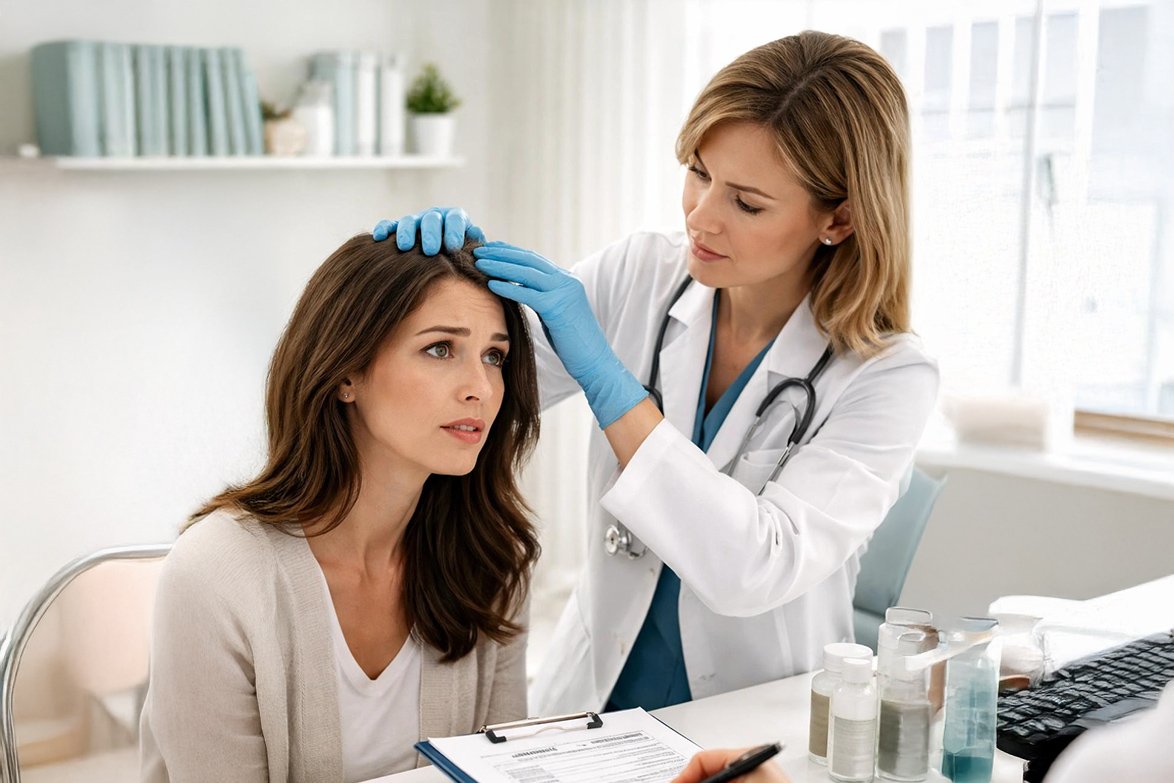
What Causes Hair Loss?
Hair growth depends on a set of conditions being met — adequate nutrition, hormonal balance, a healthy scalp and the absence of significant physiological stress. Any of the following may contribute:
- Nutritional deficiencies, including iron, vitamin D, zinc and B vitamins
- Hormonal changes, including thyroid dysfunction, PCOS and postpartum changes
- Chronic or acute physical and psychological stress
- Restrictive dieting, rapid weight loss and inadequate protein intake
- Certain medical conditions and medications
- Genetic pattern hair loss
- Scalp conditions
Several of these commonly occur together, which is one reason single-factor treatments so often disappoint.
Our Assessment Process
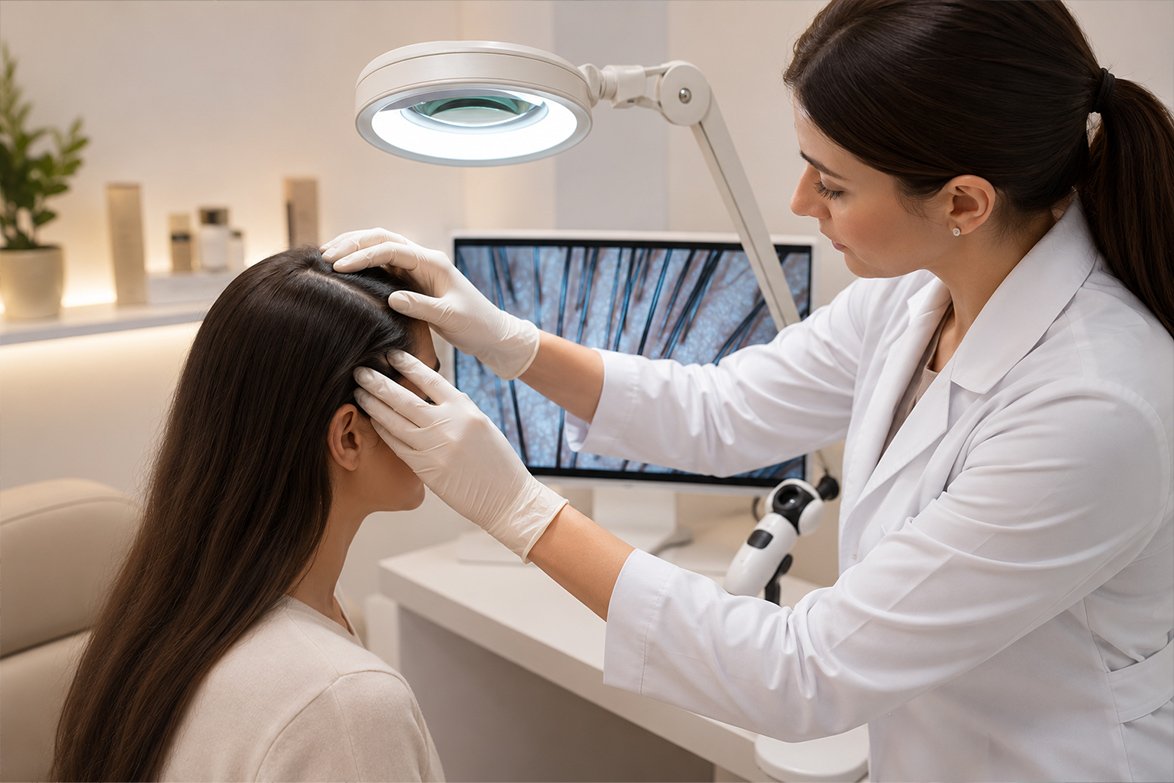
Medical Hair Consultation
A physician takes a detailed history: pattern and timeline of loss, family history, diet, medications, recent illness, stress — and where relevant — menstrual and postpartum history.
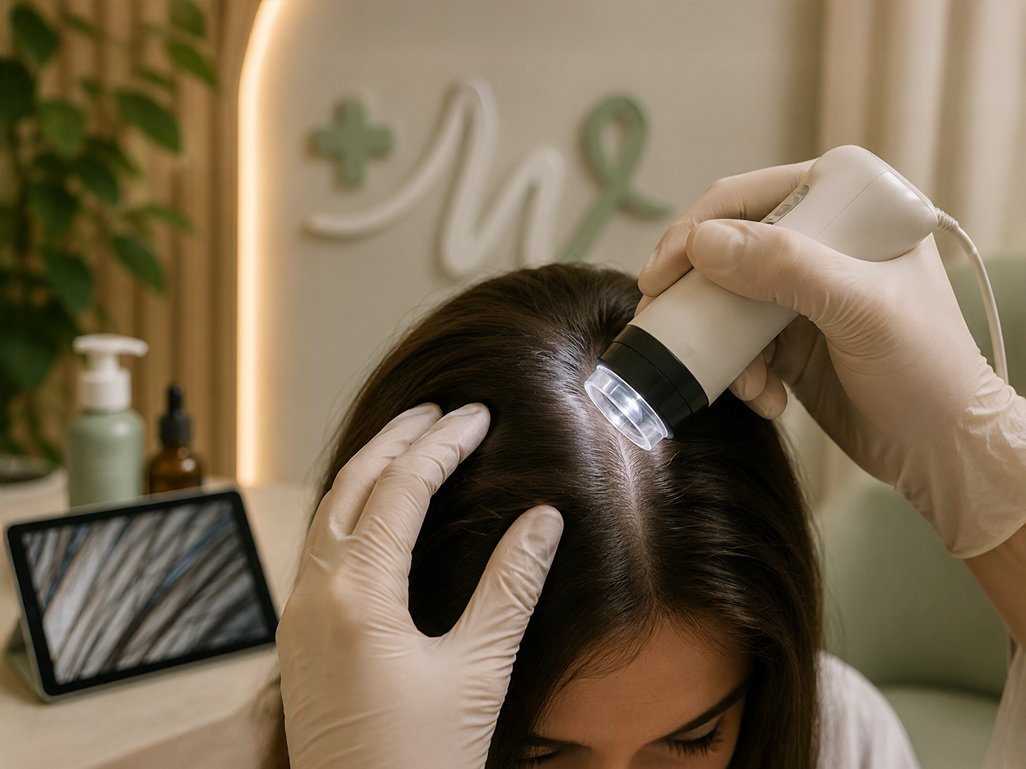
Hair and Scalp Examination
Clinical assessment of the pattern and distribution of loss and the condition of the scalp, which helps narrow the likely causes.

Blood Test Evaluation
Where indicated, testing of nutritional, thyroid and hormonal markers relevant to hair health. This is what turns a guess into a diagnosis.
Treatments & Ongoing Monitoring

Your Personalised Plan
Treatment built on your findings, which may include nutritional correction, dietary changes, medical therapy where appropriate, and nutrient infusion as part of a wider plan.
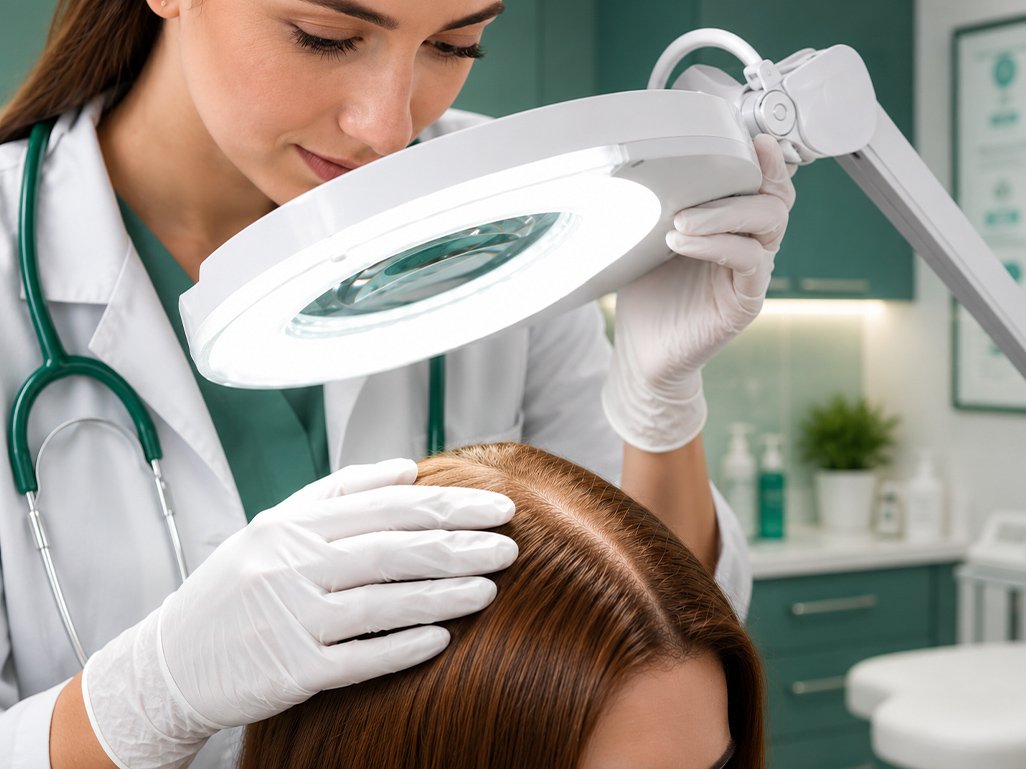
Follow-up Monitoring
Hair responds slowly. Scheduled review allows us to confirm whether markers are correcting and adjust the plan accordingly.

Nutrition and Hair Health
Nutrients involved in normal hair health include biotin and the wider B-complex group, vitamin C, zinc, iron and amino acids. Where assessment shows a deficiency, correcting it may help support healthy hair as part of a broader plan.
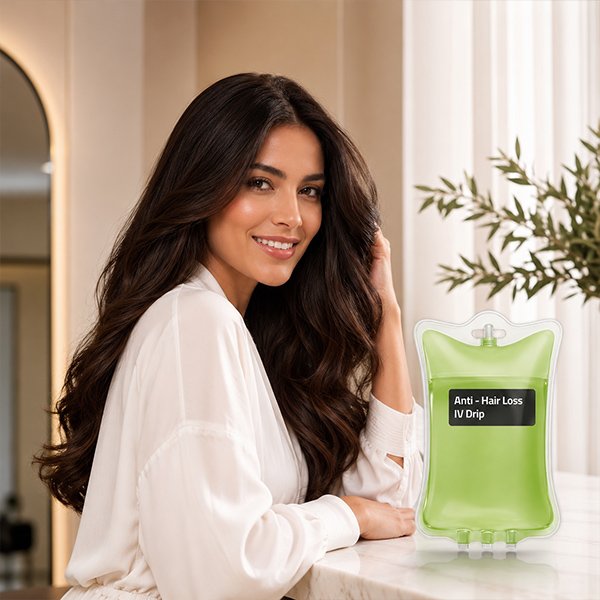
Hair Wellness IV Therapy
Where a nutritional contribution has been identified, a physician-prescribed nutrient infusion may be included as one component of your treatment plan, delivering selected vitamins, minerals and amino acids under clinical supervision. It is not a standalone treatment for hair loss.